
Progress against the 2024-2028 equality outcomes
We are pleased to report progress in relation to the outcomes and our action plan as follows.
Equality outcome 1
Revenue Scotland will actively promote equality, diversity and inclusion in designing and delivering our services.
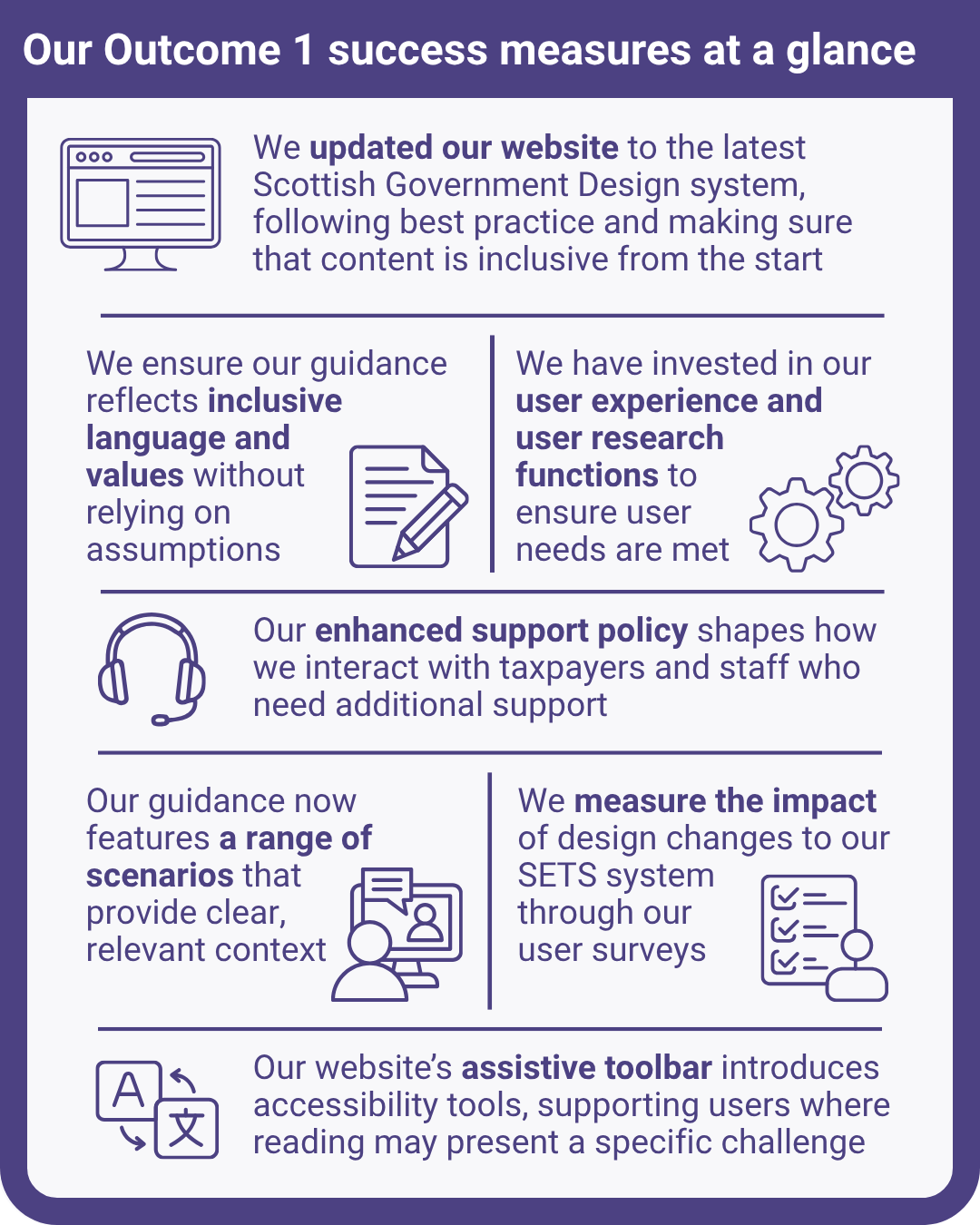
- We updated our website to the latest Scottish Government Design system, following best practise and making sure that content is inclusive from the start
- We ensure our guidance reflects inclusive language and values without relying on assumptions
- We have invested in our user experience and user research functions to ensure user needs are met
- Our enhanced support policy shapes how we interact with taxpayers and staff who need additional support
- Our guidance now features a range of scenarios that provide clear, relevant context
- We measure the impact of design changes to our SETS system through our user surveys
- Our website's assistive toolbar introduces accessibility tools, supporting users where reading may present a specific challenge
Success measures
As we design our products, projects and communications, we consider the impacts on protected characteristics.
We believe that as a highly performing public body, we can lead by example in promoting EDI. We are committed to adopting an inclusive approach, seeking to remove barriers and creating better services for our service users.
We have made SETS easier for people to use. All changes follow Scottish Government design principles and are tested before they go live.
Last year our website was updated to the latest Scottish Government Design system. This provided various enhancements that are considered the best practice approach for modern website development such that content is inclusive from the start and can be navigated with ease.
We receive positive stakeholder feedback (comments from the people and organisations who use our services) on the accessibility of our services and we are collecting necessary information about our users and applying it to service designs.
We measure the impact that design changes to SETS, and our website have made through our user survey work which seeks to extend our understanding of our userbase and leads to further improvements based on directly expressed user needs.
Service users are aware of the different ways in which we can support their needs.
Our web-content teams continue to review content and work to ensure that our guidance reflects inclusive language and values. This means avoiding references to age, gender, or other characteristics unless they are essential to the context.
For example, our Leases and ADS guidance now features a broader range of scenarios that provide clear, relevant context for all users - without relying on stereotypes or assumptions.
This approach also feeds into our enhanced support policy and how we interact with taxpayers and staff who need additional support. This is achieved through our induction and onboarding arrangements as well as ongoing training within teams. We also highlight these services to our users on our website.
We take an inclusive approach to the way in which we communicate with our service users.
The start of 2025 also saw the first full year use of the ‘ReciteMe’ assistive toolbar via the corporate website. Over 800 website users made use of this service across almost 2000 pages of read content.
This technology enables our website users to change the way that the site appears and sounds to them and helps people read the website more easily. They can change colours and text sizes and the website can now be consumed and read aloud in any number of languages therein supporting users where reading may present specific challenges.
We engage and collaborate with relevant stakeholders who represent the protected groups who interact with our services.
We have recently invested further in both our user experience and user research functions within our digital teams and continue to reach out to others to ensure service user needs are met.
We are well connected with networks and equality groups.
Across the civil service, team members continue to engage with and seek opportunities within the various equality groups that may be relevant for a Revenue Scotland audience.
Staff are confident and trained in the needs of the public sector equality duty, the different ways we can support service users, and how to undertake meaningful EqIAs.
This remains an area of ongoing focus with refresher training on EqIAs planned for later this year.
Equality Outcome 2
Revenue Scotland will embed a celebratory culture of equality, diversity and inclusion within our organisation, to have a workforce which reflects the people we serve.
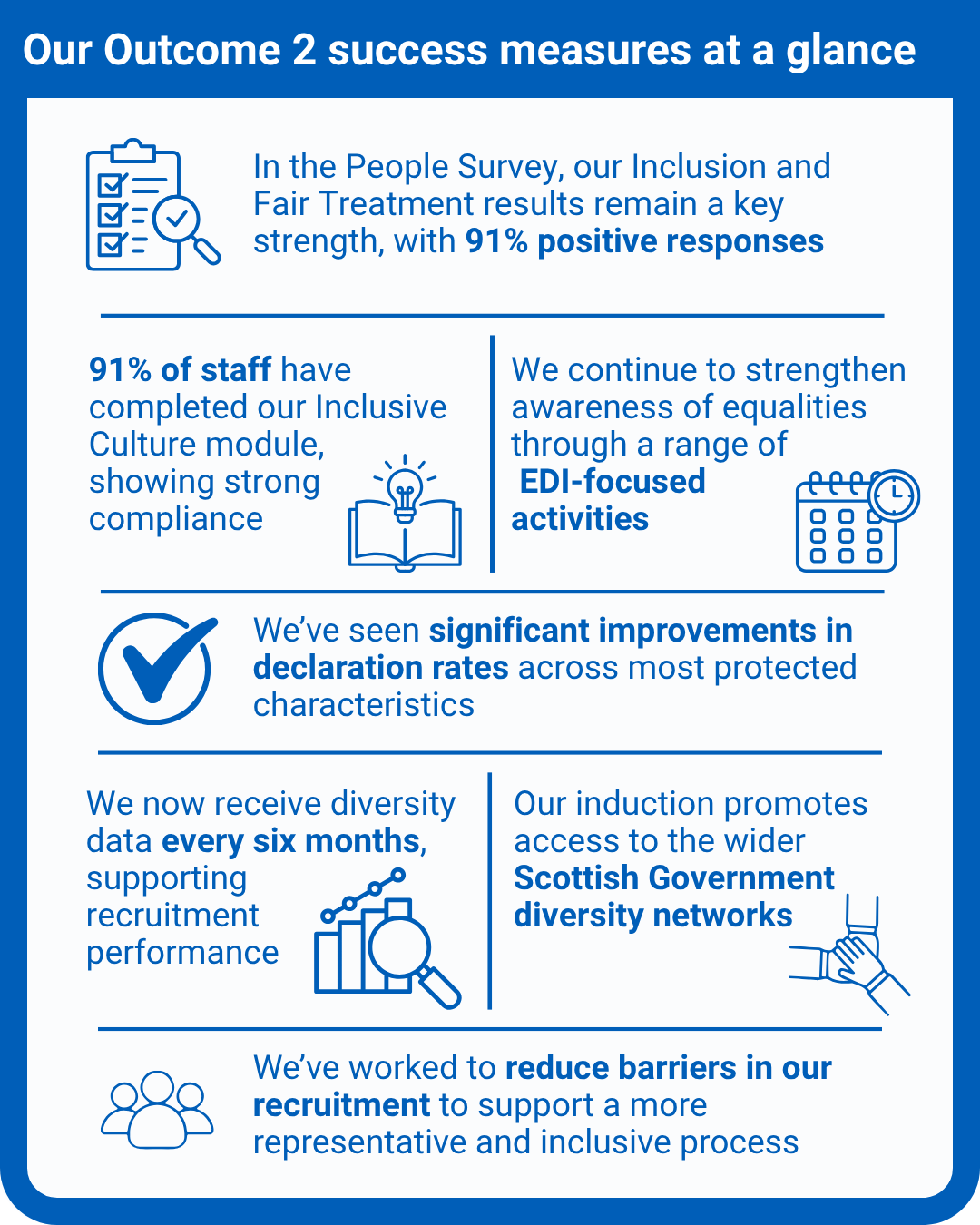
- In the People Survey, our Inclusion and Fair Treatment results remain a key strength, with 91% positive responses
- 91% of staff have completed our Inclusive Culture module, showing strong compliance
- We continue to strengthen awareness of equalities through a range of EDI focused activities
- We've seen significant improvements in declaration rates across most protected characteristics
- We now receive diversity data every six months, supporting recruitment performance
- Our induction promotes access to the wider Scottish Government diversity networks
- We've worked to reduce barriers in our recruitment to support a more representative and inclusive process
Success measures
100% of staff have completed equality and diversity training.
91% of staff have completed the Inclusive Culture module. People Services continues to support strong compliance levels through quarterly monitoring reports shared with senior managers. In addition to the Inclusive Culture module, we ensure all recruitment panels undertake inclusive recruitment practice training before they undertake recruitment, and we are also delivering “Building Better Relationships” learning that explores the power of kindness, psychological safety, and bystander apathy.
We have seen year-on-year improvements in the People Survey results relating to employee experience and equality and diversity.
The 2025 Civil Service People Survey saw an excellent 94% response rate, giving us confidence that the results truly reflect colleagues’ experiences. We also maintained a strong Employee Engagement score of 71%, demonstrating continued stability.
Our Inclusion and Fair Treatment results remain a key strength, with 91% positive responses. Our performance remains high across all themes and exceeds Civil Service high performers benchmark. Overall, the results reflect a workplace where people feel respected, included, and empowered. We will continue to look at lower scoring areas and work with colleagues to build on our strengths and drive further improvements in employee experience.
We have continued to improve staff awareness and knowledge on equalities. We harness opportunities for EDI-related learning and development.
We have continued to strengthen staff awareness of equalities by offering a wide range of EDI‑focused learning and engagement activities. Our Health and Wellbeing calendar for 2025-26 delivered a range of topics to support our employees.
Table: Revenue Scotland's Health and Wellbeing Calendar 2025-26
| Month | Event(s) |
|---|---|
| May 2025 | Mega Miles challenge; Team Quiz Quest |
| June 2025 | Health Eating Week - Healthy buffet and food hygine quiz |
| June 2025 | Nutrition for managing stress webinar |
| June 2025 | Edinburgh Pride |
| September 2025 | National Inclusion Week |
| October 2025 | Charity fundraiser coffee morning |
| November 2025 | Money and Mental Health webinar |
| December 2025 | Charity festive jumper day - festive buffet and quiz |
| January 2026 | "Looking after number one" wellbeing webinar |
| February 2026 | Family wellbeing webinar |
| March 2026 | Neurodiversity week and Purple Day |
In June, colleagues also represented the organisation at the Edinburgh Pride march.
[IMAGE]
The EDI working group has introduced an ongoing calendar of awareness sessions, with four sessions delivered to date covering Black History Month, Epilepsy Awareness, Same Sex Marriage, and the Fairer Scotland Duty. Members can share learning within their teams to help embed inclusive practice across the organisation.
National Inclusion Week (NIW) featured staff sharing firsthand experiences through a webinar “Unmasking the Mask” which highlighted the daily impact of masking. NIW also celebrated our inclusive culture by sharing a colleague’s story of overcoming socio‑economic barriers.
Our Neurodiversity toolkit was also launched this year to support staff and managers to understand, embrace and support neurodiversity.
We have continued to enhance equality groups and networks for staff. These are seen as a vibrant and important part of our organisation.
We continue to enhance equality groups and networks across Revenue Scotland, ensuring they remain active, visible and meaningful for staff. Our induction promotes access to the wider Scottish Government diversity networks enabling colleagues to connect with supportive communities and benefit from shared experience, resources and events.
Data analysis and collection is thorough and monitored regularly.
We regularly check our staff diversity data so that we can spot changes and understand what they mean.
The latest reporting shows significant improvements from 2024 to 2025 in declaration rates across most protected characteristics, suggesting increased staff confidence in sharing personal information.
Overall demographics, including age and sex, remain stable, while areas such as disability, ethnicity, socio-economic background, and caring responsibilities show more detailed insight due to enhanced data quality. Employee Passport usage has also increased, with more staff disclosing their needs and circumstances.
This consistent and structured approach to data collection and analysis provides a compelling evidence base for targeted EDI action and ongoing improvement.
We have more people from underrepresented groups applying for our vacancies.
We now receive diversity data supporting performance across our recruitment every six months. This data shows that we are continuing to attract a diverse applicant pool, including individuals from across a range of protected characteristics and socio‑economic backgrounds.
Our approach to inclusive recruitment includes issuing questions to all candidates invited to interview 24 hours in advance to support the interview experience, and issuing quality feedback to unsuccessful candidates to support their development.
We also work with Fair Start Scotland and Inclusion Scotland to widen access and better support applicants facing barriers to work, and we offer Modern Apprenticeships to create accessible entry routes. Together, these changes seek to further reduce barriers, improve candidate experience, and support a more representative and inclusive recruitment process.
Current candidate feedback reinforces the positive impact of our inclusive recruitment practices, with key themes reflected in the word cloud.
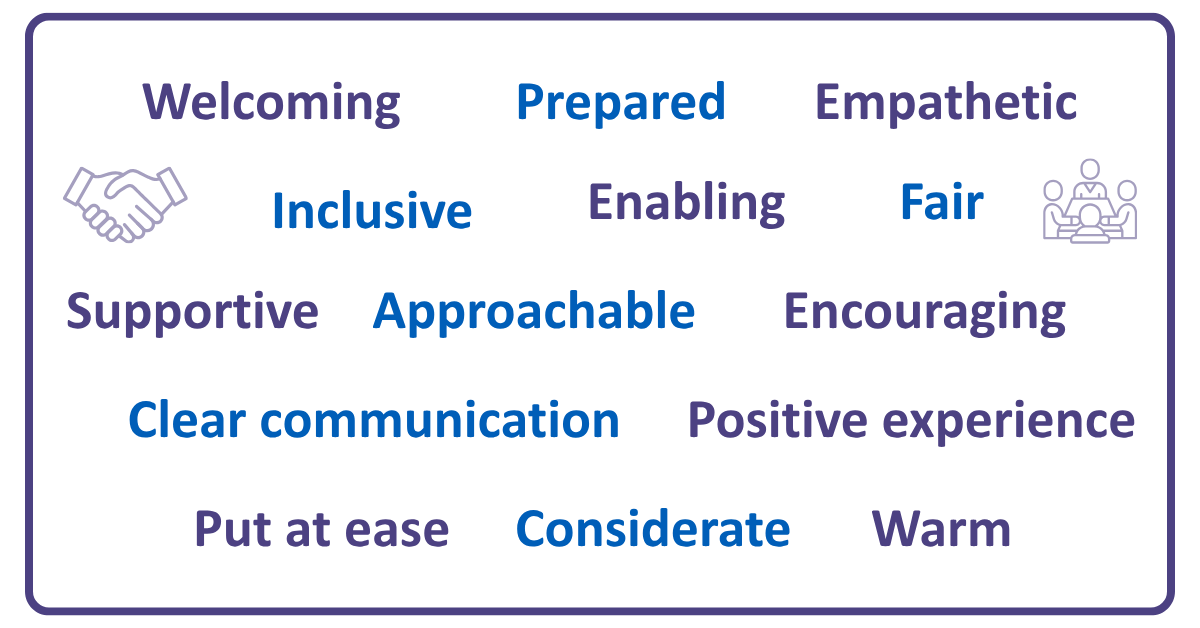
A word cloud containing the following words:
- Welcoming
- Prepared
- Empathetic
- Inclusive
- Enabling
- Fair
- Supportive
- Approachable
- Encouraging
- Clear communication
- Positive experience
- Put at ease
- Considerate
- Warm
We undertake activity to encourage diversity across our Board members to seek to ensure that our Board are representative of the population we serve.
We worked with the Scottish Government’s Attraction Team, Changing the Chemistry, the Women in Tax forum and the Scottish Government’s Public Appointments Unit to ensure an inclusive recruitment process and that we reached as wide a range of potential applicants as possible.
We also promoted our advert via a range of networks, including a range of third sector organisations, to target under-represented groups and we delivered information sessions, some of which were facilitated by external partners, aimed at encouraging those who may be unsure about their ‘fit’ for the role to apply.
We have also recruited three co-opted members to our Board Committees, to bring greater diversity to these Committees and more diversity of thought and perspectives to their deliberations. These roles will provide the individuals with skills and experience that will allow them to become future Board members within Scottish public bodies should they wish